Sugar Cravings After Lunch: Practical Food and Routine Choices
Revised · General adult food education
Wanting something sweet after lunch does not, by itself, reveal a medical cause or a failure of discipline. Start with the decision in front of you: do you need more food, want a dessert, or need a better lunch arrangement? Use ordinary meal choices and keep persistent symptoms or distress with appropriate care.
Separate the food decision from a diagnosis
“I want something sweet” is a description of what you want now. It is not a blood-glucose reading, proof of a nutrient deficiency or evidence that a particular lunch harmed you. “I feel tired,” “I am hungry” and “I would enjoy a biscuit” are also different observations. You do not have to turn them into one explanation before making an ordinary food choice.
This guide helps with food availability and a practical afternoon routine. It does not promise to eliminate cravings, diagnose their cause or prescribe a medical diet. There is no requirement to delay eating, compensate at dinner, remove all carbohydrates or buy a supplement. If you already have advice for diabetes, an eating disorder or another medical condition, use that plan rather than this general walkthrough.
Check what lunch was actually possible
Begin with the meal you actually had, without marking it good or bad. Was there time to eat it? Was enough food available for what you needed? Was the meal interrupted? Did you leave part of it because the shop choice or equipment did not work? An access problem calls for an access solution, rather than a stricter rule about sweets.
The NHS Eatwell Guide describes meals using a variety of food groups, including starchy foods, protein foods, fruit and vegetables, and dairy or alternatives. It also describes balance across a day or week, rather than making every meal meet the same pattern. Use that as broad food context. It is not a formula that proves your lunch will keep you full until a particular hour.
A lunch can include familiar rice, bread, potatoes or another starchy base alongside suitable protein foods and vegetables or fruit. A sandwich, rice-and-bean dish or other mixed meal can already combine groups. You do not need separate containers for every category. Choose the amount that fits your needs and any individual advice, rather than shrinking lunch to earn an afternoon snack.
On a narrow screen, scroll this table sideways to read all columns.
| Actual afternoon situation | A workable food or access choice | What this does not establish |
|---|---|---|
| There was no reliable lunch break | Arrange an available meal or suitable food now; consider a realistic break or help for the next workday | A lack of willpower or a demonstrated need for stricter tracking |
| You ate lunch and still want more food | Choose additional food or a snack that fits your appetite, access and dietary requirements | That one nutrient or medical condition caused the hunger |
| You would enjoy a sweet finish | Choose a dessert or sweet food deliberately, considering the wider eating pattern | A need to compensate, diagnose yourself or meet a craving-elimination target |
| You feel unwell rather than simply wanting food | Use relevant medical advice, including your existing diabetes plan if applicable | Permission to treat symptoms as an ordinary craving and wait them out |
Choose the food you can actually get and use
If you want more food, choose something suitable rather than substituting a drink solely to avoid eating. A familiar yogurt with fruit, toast with cooked beans, a suitable nut-containing snack, a sandwich or another available option might fit different settings. These are editorial examples, not equivalent nutrient exchanges, tested appetite interventions or guaranteed ways to stop wanting sweets.
Keep preparation and storage realistic. A refrigerated snack requires appropriate storage; a food needing cooking is not ready to eat because you brought it to work. If suitable equipment is unavailable, plan a different product or buy food where you will eat it. Read the current ingredients when allergies or medical requirements matter.
If you want a dessert, you can choose it as food rather than as a reward you must earn. The NHS guide advises eating foods high in fat, salt and sugar less often and in smaller amounts within the broader pattern. That general guidance does not require a guilt score or an instruction to skip the next meal. A workable choice considers what you enjoy, what is available and the rest of your ordinary eating.
A product marketed as “healthy” does not automatically answer the craving question. If comparing packaged options, read the serving size, ingredients and nutrient rows. Total sugars and added sugars are different label facts; neither predicts how you will feel after the specific snack.
Use one practical adjustment when the same difficulty recurs
If lunch repeatedly depends on a shop that is closed, identify another purchasing time or suitable backup. If meetings repeatedly displace lunch, the problem may need a workable break arrangement or support. If the chosen meal is difficult to prepare with your equipment, change the preparation plan. These choices address circumstances you can name; they do not prove a biological cause of cravings.
You might keep one food available for an afternoon when it is useful, coordinate a meal component with someone else, or put the actual ingredient on the next shopping list. Avoid buying many foods merely to start a perfect routine. The component-based meal prep guide and meal-led grocery list help with those specific preparation and purchasing tasks.
You can consider your schedule and other circumstances without deciding that they caused the desire. “A long meeting meant no lunch break” is a useful known fact. “My hormones made me need sugar” is a conclusion this page has not established. If sleep, medication, fatigue or another health concern is part of a persistent problem, describe it accurately to the relevant professional rather than adding a supplement or self-diagnosis.
A short note is optional; eating does not depend on completing it
If a pattern is unclear and a record would help, write a brief note: approximately when, what food or lunch access was available, and the practical question you want to solve. “Tuesday: lunch interrupted; wanted more food later; check a workable break” is a fictional example of an access note. It is not a patient observation or proof that the interruption caused a particular craving.
Keep missing information missing. An unrecorded lunch is not a known missed meal, and a later memory need not acquire a precise time. The optional food routine diary explains these distinctions. Use it only if its record serves your question; no calorie count, photograph or numbered craving score is required here.
If you already know the issue, solve it without keeping a diary. If recording increases food worries or strict control, pause the optional exercise and seek appropriate support. NHS guidance identifies very strict food habits and concerns about eating among reasons to consider help; if you think you may have an eating disorder, it advises seeing a GP as soon as you can.
When symptoms need a different response
A desire for sweet food alone cannot tell you that your glucose is low. NIDDK describes low blood glucose in terms of the actual glucose level and an individualized target. It also explains that insulin and some other diabetes medicines are relevant risk factors. If you have diabetes and possible low-glucose symptoms, follow the checking and treatment instructions your care team gave you. Do not apply an ordinary-craving plan in their place or change medication yourself.
NIDDK notes that low-glucose symptoms can come on quickly and can include shakiness, dizziness or confusion; severe episodes can involve loss of consciousness or seizures and need treatment right away. Seek urgent help for severe or rapidly worsening symptoms. This general article cannot determine their cause, assign your glucose threshold or supply an individualized treatment dose.
For persistent fatigue, recurrent concerning symptoms, loss of control around food or eating distress, discuss what is happening with a suitable health professional. The useful outcome here is a workable ordinary food or access decision, with health concerns kept in the appropriate care setting.
Choose the next afternoon response
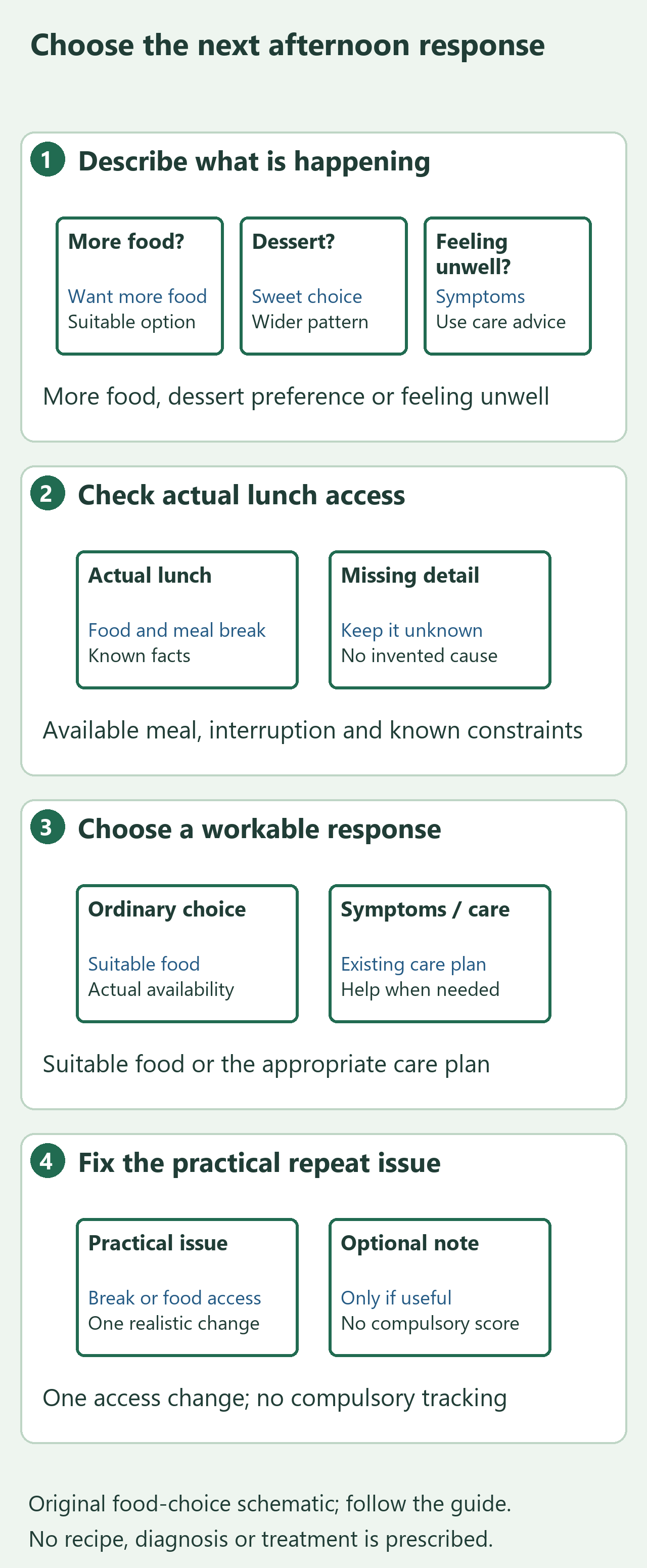
Examples to work through
These fictional examples illustrate practical choices and observations.
Lunch was interrupted, and more food would help
Choose suitable available food now and identify the practical access question for the next day. A missing break is not solved by delaying eating to prove discipline. If a medical plan applies, follow it; this example does not establish a clinical cause of hunger.
You enjoyed lunch and would like dessert
Choose the sweet food deliberately within your wider eating pattern. You do not need to label the desire a disease or compensate by skipping dinner. General NHS advice about foods high in fat, salt and sugar is broader than a rule that dessert must never follow lunch.
A diary has only two recorded afternoons
Describe those entries and retain the gaps. Two notes cannot prove an always-present pattern or that one lunch ingredient caused a desire. Use a practical access adjustment if helpful, or no record when the problem is already clear.
An insulin user becomes shaky and confused
Use the person’s established low-glucose checking and treatment plan and seek urgent help for severe symptoms. Do not treat that situation as a routine dessert decision or wait through a craving exercise. This article supplies no diagnosis, medication change or personal treatment dose.
Optional afternoon food-access note
Use these optional reminders to mark fields you want to keep in your own notes. The downloadable blank sheet contains every record field. Keep your completed record in your own appropriate private place.
Frequently asked questions
Does wanting sugar after lunch mean my blood glucose is low?
The desire alone is not a glucose reading or diagnosis. NIDDK describes an actual glucose level and individualized target, with particular medicine-related risks. Use your established diabetes advice when relevant and seek appropriate help for concerning symptoms.
Should I cut carbohydrates out of lunch?
This guide gives no such instruction. The NHS Eatwell Guide includes starchy foods within a broader eating pattern. Choose a suitable meal and follow any individual diet advice; removing a whole food group is not a demonstrated solution to an ordinary sweet-food desire here.
Can I have a snack or dessert?
An ordinary food choice can include additional food, a snack or a dessert that fits your circumstances and relevant advice. Consider the wider eating pattern, ingredients and storage. These choices are not a guaranteed treatment for cravings or a reason to compensate at another meal.
Must I track a week before changing my lunch routine?
No. If the practical issue is already clear, such as unavailable food or no reliable break, address it directly. A short record is optional and should preserve uncertainty. Pause recording when it increases distress; eating does not depend on completing a diary.
Sources and what they support
- NHS: The Eatwell Guide
Ordinary food groups, protein foods and balance over a day or week. The source displays a last-reviewed date of 29 November 2022; use individual advice for medical dietary requirements.
- FDA: How to Understand and Use the Nutrition Facts Label
US serving quantities, matching comparisons, nutrient grams versus %DV, and added sugars already included in total sugars. The source is dated 5 March 2024; label references are not personal meal targets.
- NIDDK: Low Blood Glucose (Hypoglycemia)
An actual glucose level and individual target, possible symptoms and relevant medicine risks. Last reviewed July 2021. Follow your established care plan; an ordinary sweet-food desire is not a diagnosis.
- NHS: Overview—Eating Disorders
Food worries, strict routines and getting appropriate help. Last reviewed 23 January 2024. A craving or an optional food note is not diagnosed as an eating disorder.
Sources were checked on 4 November 2026 UTC. The food-choice examples, arithmetic and blank records are original editorial aids, not tested recipes, nutrient analyses or medical assessments.